 how-to
Need Help Getting a Motorcycle Transport in Colorado?
Last Updated: November 1, 2026
Quick Summary
Getting help with motorcycle transport in Colorado starts with choosing who moves the bike and how. Moto Recovery, a Colorado-based 501(c)(3) nonprofit, runs a rider-to-rider transport program as availability allows, with optional donations. You can also compare professional shipping, towing, or self-hauling to fit your situation.
- Professional shipping suits long distances, towing fits short local moves, and self-hauling works for tight budgets.
- Quotes depend on distance, service type, timing, bike size, whether it runs, accessibility, and season.
- Ask every carrier for a USDOT number, cargo insurance certificate, and a written bill of lading.
- Before transport, set tire pressure to spec, keep fuel near a quarter tank, and photograph existing scratches.
- Walk the bike with the driver at pickup and delivery, and sign nothing until you have inspected it.
Table of Contents
- How Motorcycle Transport Assistance Works in Colorado
- What to Know Before You Request a Motorcycle Shipping Quote
- How to Prepare a Motorcycle for Transport
- Your Motorcycle Pickup and Delivery Checklist
- Colorado Routes, Weather, and Seasonal Timing for a Motorcycle Move
- When to Call Moto Recovery for Rider-to-Rider Help
- Frequently Asked Questions
How Motorcycle Transport Assistance Works in Colorado
Getting help with motorcycle transport in Colorado starts with one decision: who moves the bike, and how. Moto Recovery, a Colorado-based 501(c)(3) nonprofit, runs a rider-to-rider transport program as availability allows, with optional donations.
Most people facing a move, a breakdown, or a bike that won't start assume there's one answer. There isn't. Several routes exist, and each fits a different situation.
Professional Shipping, Towing, or Hauling It Yourself
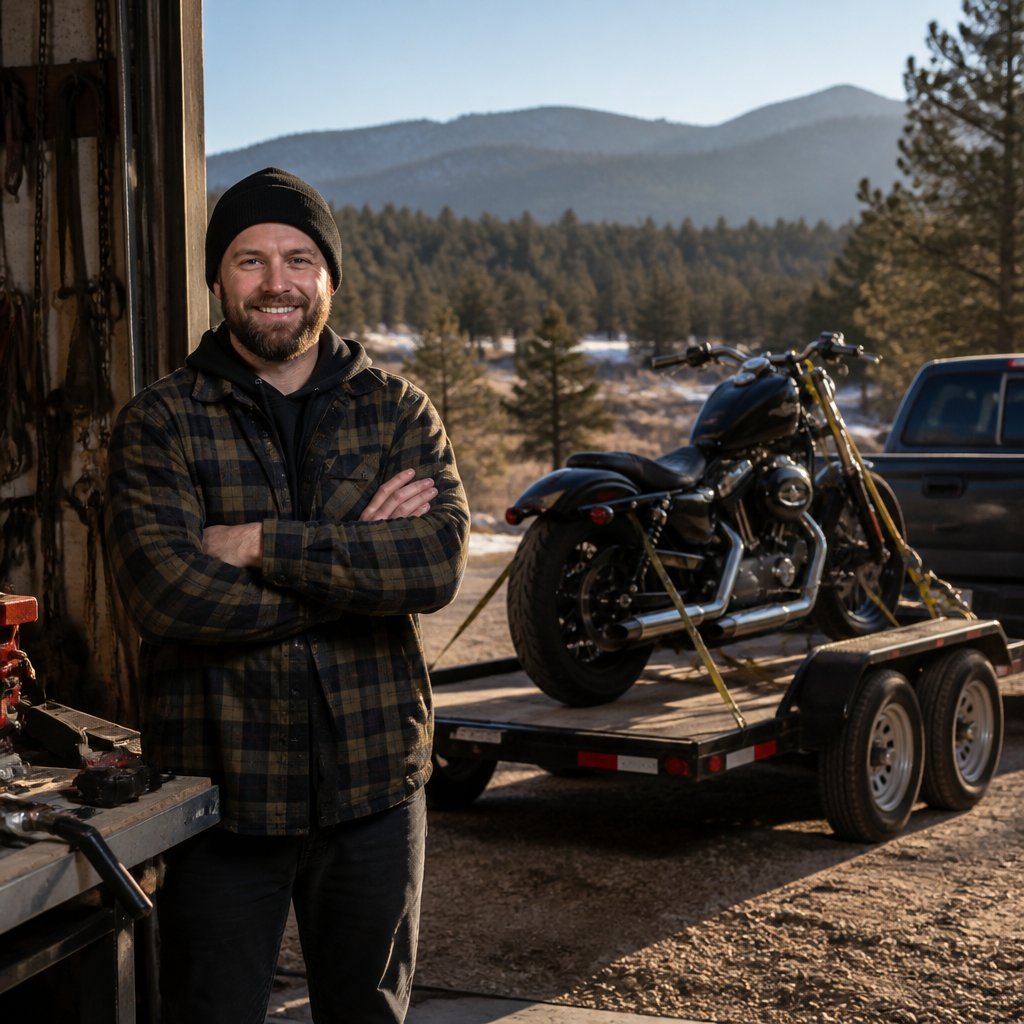
Professional motorcycle shipping is a service where a carrier picks up your bike and delivers it. Towing moves a bike on a trailer behind a truck. Self-hauling means you rent a trailer and do the driving.
Here's the honest comparison:
| Option | Best For | Watch Out For |
|---|---|---|
| Professional shipping | Long distances, no time to drive | Pickup windows can shift |
| Towing | Short local moves, running bikes | Strapping errors damage forks |
| Self-haul | Tight budgets, flexible schedules | Weather and fatigue on long runs |
A common mistake is booking the cheapest carrier without asking about insurance. Ask every time.
What to Know Before You Request a Motorcycle Shipping Quote
A motorcycle shipping quote is an estimate of what a carrier charges to move your bike from one address to another. Quotes are generally built from a handful of inputs, and understanding them helps you compare two quotes side by side.
The inputs that move a quote:
- Distance and route. Mileage sets the base. A direct interstate run prices differently than a route that threads mountain passes or requires a transfer between terminals.
- Service type. Door-to-door costs more than terminal-to-terminal because the carrier spends time on residential streets and driveways instead of a loading dock.
- Timing. Scheduled transport inside a flexible window is the least expensive option. Same-day, next-day, and urgent pickup carry a premium because the carrier has to rearrange an existing load.
- Bike size and weight. A cruiser or touring bike takes more deck space and tie-down attention than a standard or dual-sport. Trikes and sidecars need specialized equipment.
When you request a quote, have these ready so the number you get is real and not a placeholder:
- Pickup and delivery ZIP codes
- Bike make, model, and approximate weight
- Whether the bike runs and rolls
- Your flexible date range
Compare quotes on the same terms before you decide which is actually cheaper.
Vetting the Carrier: Insurance, Licensing, and Paperwork
Vetting means checking that the carrier is insured and documented before money changes hands.
Ask for:
- A valid USDOT number and operating authority
- A certificate of insurance showing cargo coverage
- A written bill of lading listing the bike's condition
- Photos of the bike at pickup, timestamped
The Federal Motor Carrier Safety Administration maintains public records you can check before booking. A reliable carrier will hand over this paperwork without hesitation. One that dodges the question is telling you something.
Riders Helping Riders means telling you plainly what a quote includes before you sign.
How to Prepare a Motorcycle for Transport
Preparation is the difference between a clean delivery and a damage claim. The goal is a bike that is stable, documented, and easy to load, with a paper trail that protects you if something goes wrong.
Do these before the truck arrives:
- Top off tire pressure to spec
- Fill the tank to about a quarter, no more
- Remove loose items, bags, and GPS mounts
- Disconnect or tend the battery
- Note existing scratches with photos
Why each one matters:
- Tire pressure. A soft tire lets the bike rock against the straps and can flex the sidewall over a long haul. Set it to the spec on the swingarm or owner's manual.
- Fuel level. A full tank adds weight high on the bike and can vent or seep with altitude and temperature swings. A quarter tank is enough to load and unload without hauling extra weight.
- Loose items. Bags, mounts, and phone cradles vibrate loose and become projectiles or scratches. Take them with you.
- Battery. A bike that sits through a move can lose charge.
- Photos. Timestamped photos at pickup are your baseline. Without them, a pre-existing scratch becomes an argument at delivery.
The Handoff: Pickup and Delivery Inspection
Pickup and delivery is where the handoff happens, and it deserves your full attention.
At pickup:
- Match the bill of lading to the bike's actual condition
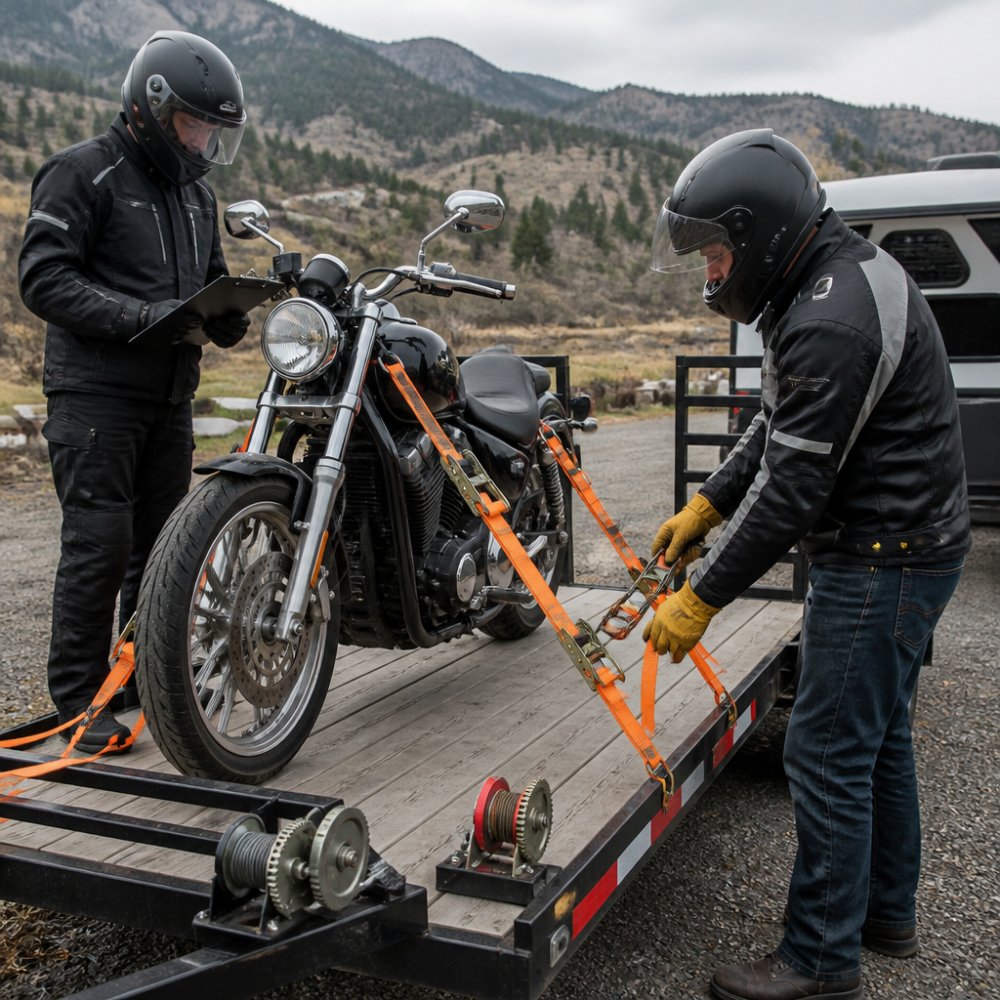
- Watch how the straps attach, never through the brake lines
- Confirm the delivery window in writing
- Get the driver's direct number
At delivery:
- Inspect the bike before signing anything
- Photograph any new damage immediately
- Keep your copy of the paperwork
New riders moving a first bike should also check what gear travels with it. The beginner motorcycle gear guide covers helmets, jackets, boots, and fit checks.
If you want the prep checklist on your toolbox, grab a sticker or T-shirt from MotoRecovery.org/shop and keep the reminder where you will see it.
Your Motorcycle Pickup and Delivery Checklist
Pickup and delivery is where the handoff happens, and it deserves your full attention. Walk the bike with the driver before it loads and again before it unloads.
At pickup:
- Match the bill of lading to the bike's actual condition
- Watch how the straps attach, never through the brake lines
- Confirm the delivery window in writing
- Get the driver's direct number
At delivery:
- Inspect the bike before signing anything
- Photograph any new damage immediately
- Keep your copy of the paperwork
New riders moving a first bike should also check what gear travels with it. The beginner motorcycle gear guide covers helmets, jackets, boots, and fit checks.
Colorado Routes, Weather, and Seasonal Timing for a Motorcycle Move
Colorado weather can affect your transport window, especially in mountain areas.
Timing tips:
- Book mountain routes between late spring and early fall
- Expect afternoon storms on high passes in July and August
- Watch for ice on shaded curves even in shoulder season
- Build a buffer day into any pass crossing
The Wind Therapy program explores the mental side of riding.
When to Call Moto Recovery for Rider-to-Rider Help
Call Moto Recovery when you need motorcycle transport assistance and want to work with riders who understand what's on the truck.
Reach out early and share your dates and locations.
See the transport service and request help to start the conversation.
If you want a quote or have questions before committing, contact the team directly.
Moto Recovery offers rider-to-rider transport help, Wrench Wednesday workshops, and Wind Therapy group rides.
Stronger With Every Mile. It's more than a motto.
Frequently Asked Questions
How can I get help transporting a motorcycle in Colorado?
Start by deciding whether you need professional shipping, a tow, or a self-haul with a rented trailer. Then gather your bike's year, make, model, weight, pickup and delivery addresses, and your preferred dates, because every carrier needs those details to quote the job. Compare a few quotes and confirm insurance and licensing before you book. If cost is the barrier, Moto Recovery offers motorcycle transport assistance as availability allows, so ask early rather than the day you need to move.
What information do I need to get a motorcycle shipping quote?
A useful motorcycle shipping quote depends on specifics, not guesses. Have your pickup and delivery ZIP codes, whether the location is door-to-door or terminal, the bike's make, model, year, and approximate weight, whether it runs and rolls, and your date window. Mention any modifications like a windshield, saddlebags, or a sidecar. Ask what the quote includes and whether pickup is same-day, next-day, or scheduled. Get the total in writing before you commit.
How should I prepare a motorcycle for transport?
Drain or top off fluids according to the carrier's instructions, and reduce fuel to the level they request. Remove loose items like helmets, gloves, and tool rolls, and take off or secure detachable luggage and electronics. Note existing scratches and dings with dated photos before handoff. Check tire pressure and confirm the battery is secure. If the bike does not run, tell the carrier in advance so they bring the right equipment. A clean, documented bike is easier to inspect at pickup and delivery.
Is motorcycle transport assistance available for riders facing hardship?
It can be. Moto Recovery is a Colorado-based 501(c)(3) nonprofit that offers grassroots motorcycle transport assistance as availability allows, with optional donations. That means help is real but not guaranteed on demand, so reach out as soon as you know you need a move. Be ready to explain your situation, your bike, and your timeline. Riders Helping Riders is how the community works, and asking for help early gives volunteers the best chance to coordinate a safe transport.