 how-to
Why a Beginner Motorcycle Maintenance Workshop Pays Off
Last Updated: October 29, 2026
Quick Summary
A beginner motorcycle maintenance workshop gives you supervised time with your own bike and tools, so you can learn basics like oil changes, chain care and brake checks hands-on. Moto Recovery's Wrench Wednesday runs March through September, providing the space and tools while you bring the bike and manual.
- After one supervised session, most beginners can check tire pressure, chain slack, oil level, lights and lever free play.
- Wrench Wednesday sessions fall on the last Wednesday of each month, moving a week earlier if that date is the month's final day.
- Bring your owner's manual, a notebook, closed-toe shoes and clothes you do not mind getting oily.
- Warm the engine briefly before an oil change, replace the crush washer and change the filter every time.
- Many modern bikes need a dealership tool to reset service reminders; some dealers reset free with a signed statement.
Table of Contents
- What a Beginner Motorcycle Maintenance Workshop Actually Gives You
- The Real Benefits of Preventative Maintenance
- Your Basic Motorcycle Maintenance Checklist
- Motorcycle Oil Change for Beginners
- The Motorcycle Maintenance Tools You Actually Need
- Why a Motorcycle Service Manual Beats Guesswork
- How Wrench Wednesday Works and How to Join
- Resetting a Service Reminder After Your Own Maintenance
- Frequently Asked Questions
What a Beginner Motorcycle Maintenance Workshop Actually Gives You
A beginner motorcycle maintenance workshop gives you time with your own bike and tools in your hands. This guide covers what to bring and what you can learn.
Here is the part most guides skip: you do not need to be mechanically gifted to benefit. You need a manual, a few basic tools, and a place to practice. A workshop supplies a place to practice.
If you are brand new, start with a primer on how to learn basic motorcycle maintenance before your first session. It makes the class far less overwhelming.
The Real Benefits of Preventative Maintenance
Preventative maintenance is the work you do on a schedule, before something fails.
Fewer Breakdowns, Fewer Costly Repairs
Many riders find that a simple monthly walkaround prevents most of the surprises that ruin a ride. A common mistake is waiting for a noise or a warning light. By then, you are already behind.
Longer Vehicle Lifespan and Better Reliability
That reliability is the real payoff. It is also why the phrase "Stronger With Every Mile" fits here. Care compounds.
Your Basic Motorcycle Maintenance Checklist
A basic motorcycle maintenance checklist covers the items you can inspect in a few minutes before a ride and the tasks you handle on a schedule. Keep it short enough that you will actually do it.
- Tires: check pressure and look for cracks, nails, or flat spots
- Chain: check tension and lubrication
- Brakes: test lever and pedal feel, check pad thickness
- Oil: check the level on a level surface
- Lights: test headlight, brake light, turn signals
- Controls: check clutch cable and brake levers for slack
- Fasteners: glance over visible bolts and mirrors
A practical 7-step motorcycle battery maintenance guide walks through voltage checks, terminal cleaning, and storage.
Safety First, Every Time
Before you touch a wrench, put on eye protection and nitrile gloves. Work on a level surface with the bike on its center stand or a proper lift, never balance a bike on a milk crate. Let the engine cool before you reach near the exhaust or drain plug; hot oil and hot metal are the two most common beginner injuries. Keep fuel and battery acid away from sparks, and disconnect the negative battery terminal before any electrical work. If a bolt will not budge, stop and ask. Stripping a fastener is a cheap lesson; a tipped-over bike is not.
What You Can Safely Do After One Session
After a single supervised session, most beginners can check tire pressure, inspect the chain for slack and dry links, top off oil, test the lights, and adjust clutch and brake lever free play. Those five tasks cover most of what leaves riders stranded. Save the torque-sensitive jobs, axle nuts, brake caliper bolts, oil drain plugs, for a second session with a torque wrench and someone checking your work.
What to Bring to a Workshop
Bring your owner's manual and a notebook. Wear closed-toe shoes and clothes you do not mind getting oily.
Motorcycle Oil Change for Beginners
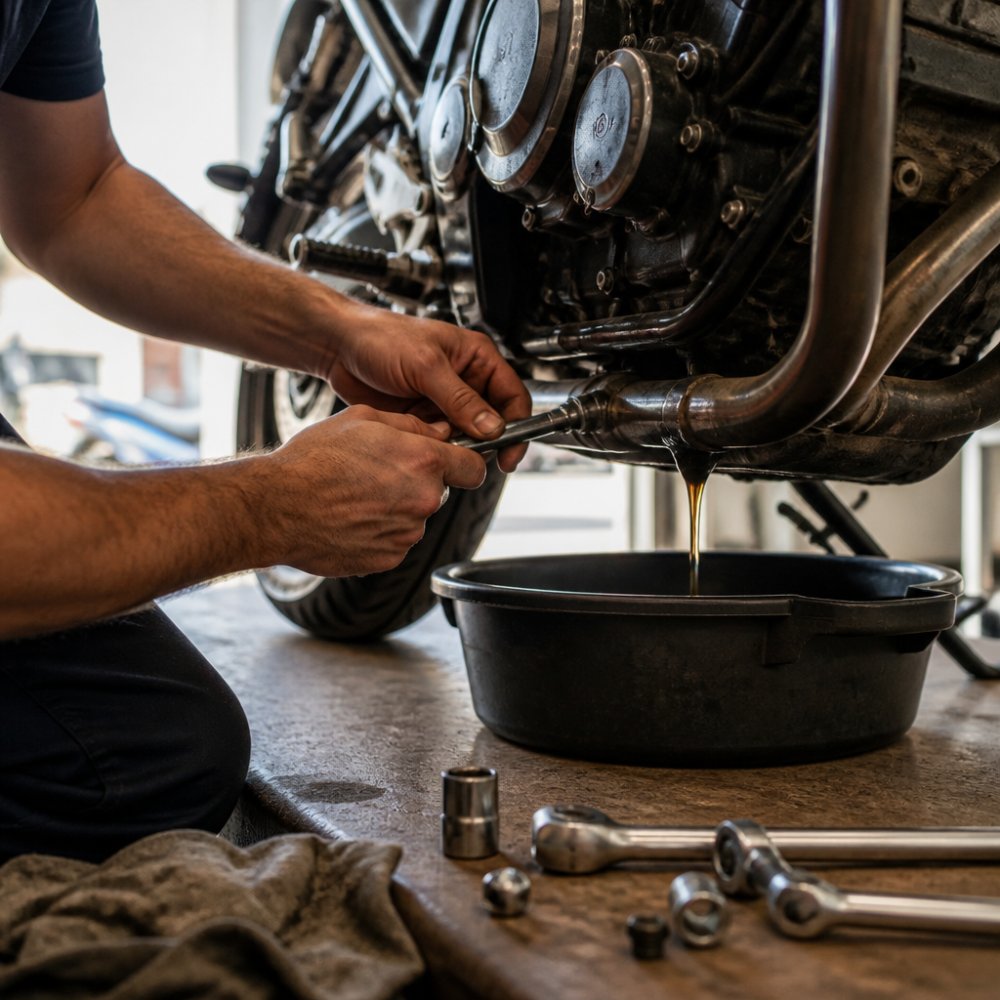
The details matter more than the steps:
- Warm the engine briefly so the oil flows out fully
- Use the oil grade your manual specifies, not what a friend recommends
- Replace the crush washer on the drain plug
- Change the filter every time, not every other time
- Check the level after running the engine, not before
A dirty filter or the wrong oil weight causes more damage than most riders realize. Stick to the manual's interval and grade. When in doubt, change it sooner.
The Motorcycle Maintenance Tools You Actually Need
| Tool | What It Handles |
|---|---|
| Socket set | Oil drain plug, covers, fasteners |
| Combination wrenches | Axle nuts, adjusters, levers |
| Hex key set | Fairing bolts, handlebar controls |
| Tire pressure gauge | Weekly pressure checks |
| Chain brush and lube | Cleaning and lubricating the chain |
| Funnel and drain pan | Clean oil changes |
| Torque wrench | Anything with a spec in the manual |
| Nitrile gloves and rags | Staying clean and spotting leaks |
Why a Motorcycle Service Manual Beats Guesswork
A motorcycle service manual is a useful resource for a new owner.
Here is the honest part. In the beginning, the terms will not make sense. A manual might tell you to check "free play" or "torque to spec" and you will stare at the page.
Back the manual up with a video or image search for visuals.
Use the manual as your guide, and use a video as a visual aid.
How Wrench Wednesday Works and How to Join
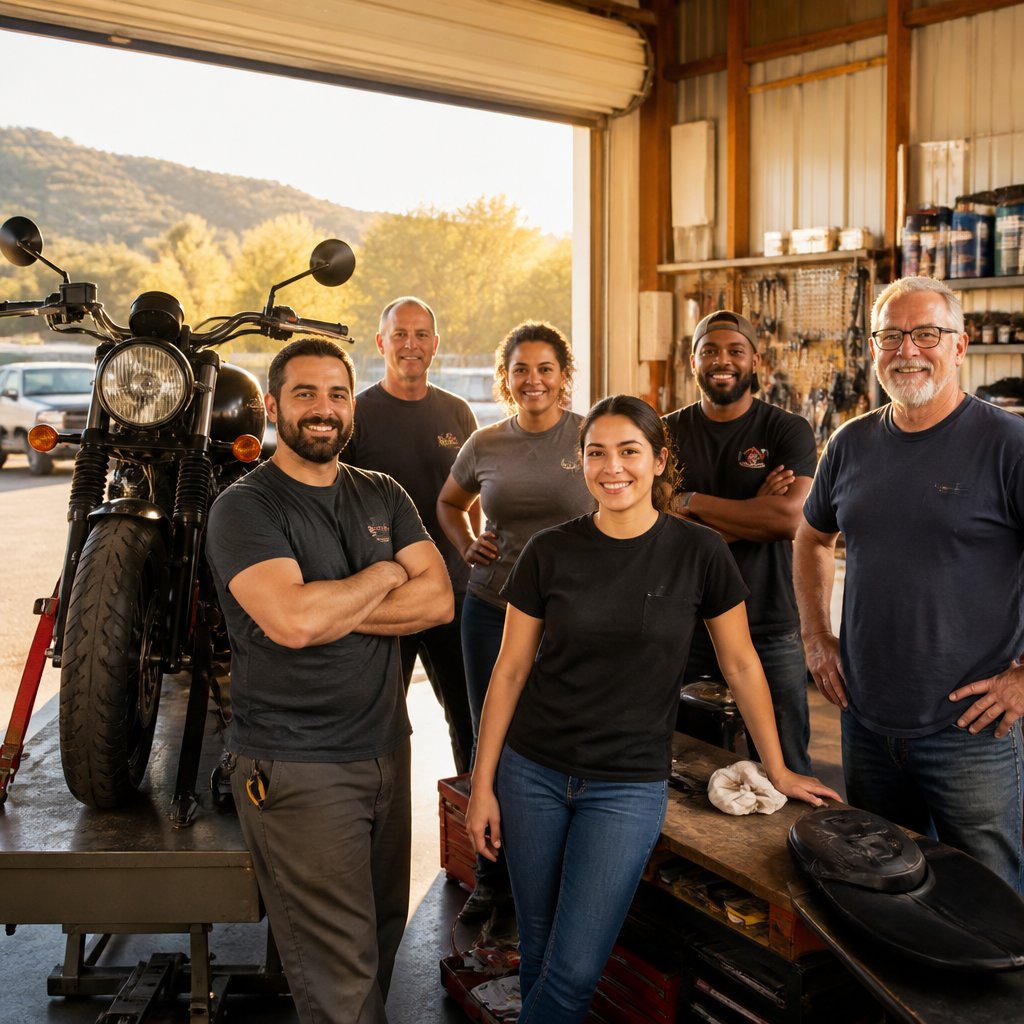
Wrench Wednesday is Moto Recovery's monthly garage session, running March through September. It offers an opportunity to learn motorcycle maintenance basics. Moto Recovery provides the space and tools.
The schedule has one quirk worth knowing. Sessions fall on the last Wednesday of each month, unless that last Wednesday is the final day of the month. In that case, the session moves to the week prior. Official schedules live on the Moto Recovery website and social media posts, so check before you load up.
What a Beginner Can Expect to Learn
Wrench Wednesday offers an opportunity to learn motorcycle maintenance basics, including:
- Oil changes
- Air filters and spark plugs
- Chain and brake maintenance
- Clutch cables and brake levers
What to Bring and How to Prepare
Bring your bike with prior notice, your owner's manual, and clothes you do not mind getting oily. Closed-toe shoes are a must. Moto Recovery provides the space and tools; you bring the bike, the manual, and the willingness to get your hands dirty. If you are not sure your bike is a good fit for a session, reach out first, most are.
How to Choose a Workshop That Fits You
Other motorcycle groups and dealerships may offer workshops too. Shop around and find the room that fits you.
Ready to join a session? Reach out to give notice about bringing your bike. Want to support the mission while you are at it? Browse the Moto Recovery shop for shirts and stickers.
Resetting a Service Reminder After Your Own Maintenance
Many modern motorcycles require a special dealership tool to reset the service interval.
Here are some ways riders handle it:
- Some dealers will reset the reminder for free if you sign a statement that they performed no service, only the reset
- Others charge a labor fee, typically billed as 20 to 30 minutes of shop time
- Some riders simply ride around with the wrench icon showing
- Third-party programs and reset devices exist for many models
Moto Recovery has the Dealer Tool UK, which accesses Triumph ECUs to reset service reminders. The software is typically valid on models two years or older. It currently does not work on the Triumph 400 series, because those bikes do not use Triumph-programmed ECUs.
That is a niche fix, not the main event. The main event is learning the work in the first place.
Moto Recovery runs Wrench Wednesday from March through September, providing space and tools. The nonprofit also offers Wind Therapy group rides, Basic Rider Course scholarships, and motorcycle transport assistance for riders who need a hand. Get started with Moto Recovery.
Frequently Asked Questions
What can a beginner learn at a motorcycle maintenance workshop?
Wrench Wednesday offers an opportunity to learn motorcycle maintenance basics, including oil changes, air filters, spark plugs, chain and brake maintenance, clutch cables, and brake levers.
What tools do I need for basic motorcycle maintenance?
A socket set, combination wrenches, a torque wrench, hex keys, a filter wrench, a funnel, a drain pan, and a tire pressure gauge are tools used for motorcycle maintenance.
Should I use a service manual when working on my motorcycle?
Yes. Use a motorcycle service manual. If the terms are unfamiliar, back it up with a YouTube video or image search for visuals, and always stick to the service manual.
Why does my motorcycle still show a service reminder after maintenance?
Many modern motorcycles require a special dealership tool to reset the service interval. Some will reset it for free if you sign a statement that no service was performed. Third-party reset devices and software are available, and Moto Recovery has the Dealer Tool UK for Triumph ECUs on models two years or older.