 ultimate-guide
Beginner Motorcycle Gear Guide 2026: What to Buy First
Table of Contents
- Start Here: How to Think About Beginner Motorcycle Gear
- The Beginner Motorcycle Gear Checklist: What to Buy First
- Motorcycle Helmet Guide for Beginners: Fit, Certification, and What to Spend
- Motorcycle Jackets: Textile, Leather, and Armor Placement
- Riding Gloves, Boots, and Pants: Protecting Hands, Ankles, and Legs
- Motorcycle Gear for Hot Weather: Staying Cool Without Dressing Down
- Waterproof Motorcycle Gear: Afternoon Storms and Monsoon Season
- Dressing for Elevation and Temperature Swings
- Fit Checks and Sizing: Buying Gear That Actually Works
- Building a Beginner Gear Budget in Tiers
- Earplugs, Comms, and Other Gear Riders Forget
- Sunscreen, Hydration, and Gear That Carries Both
- Gear Maintenance, Inspection, and When to Replace It
- Planning Your Gear Purchases Around the Holidays
- Conclusion: Ride at Your Own Comfort Level
- Frequently Asked Questions
Last Updated: October 21, 2026
Start Here: How to Think About Beginner Motorcycle Gear
A beginner motorcycle gear guide in 2026 starts with one honest truth: there is no single correct kit. Gear is a spectrum, and where a rider lands on that spectrum depends on budget, riding style, climate, and comfort level.
The first thing to understand is that gear protects in layers. Abrasion resistance handles the slide. Impact protection handles the sudden stop. Weather protection handles the rain, wind, and temperature swings that define riding in the mountains. A rider can build all three over time.
The second thing: gear only works if it fits and if the rider actually wears it. A closet full of expensive armor that stays home on hot days protects nobody.
The Beginner Motorcycle Gear Checklist: What to Buy First
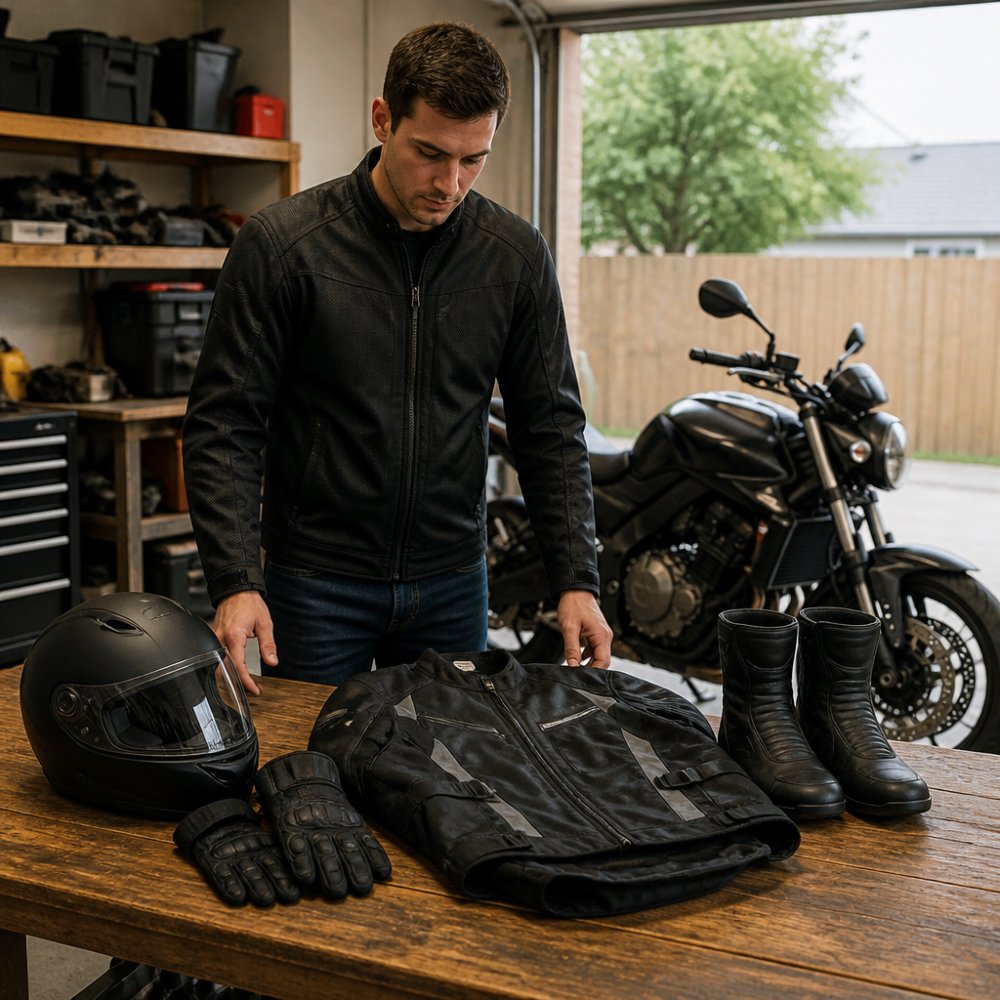
A beginner motorcycle gear checklist should prioritize the items that protect the most vulnerable parts of the body first. That means a helmet, gloves, over-the-ankle boots, and a riding jacket before anything else. Everything beyond that is an upgrade, not a starting requirement.
The Bare-Basics Tier
The bare-basics tier is exactly what it sounds like: heavy-duty pants, a long-sleeved shirt or jacket, sturdy over-the-ankle boots, gloves, and a DOT-approved helmet. It is not glamorous, and it is not maximum protection, but it is a legitimate starting point for a new rider on a tight budget. Many riders begin here and upgrade piece by piece.
The Everyday Rider Tier
The everyday rider tier adds purpose-built gear: a textile motorcycle jacket with CE-rated armor at the shoulders and elbows, riding gloves with knuckle and palm protection, riding pants or reinforced jeans, and a full-face helmet. This is where most commuters and weekend riders land, and it covers the daily ride without stretching a budget to its limit.
The Full Kit Tier
The full kit tier is the decked-out end of the spectrum: a leather or heavy textile suit, a back protector, chest protection, armored underwear, waterproof over-layers, a quality full-face helmet, dedicated riding boots, and comms. A rider can spend close to the value of the bike here. It is a fine choice for touring and long-distance riders, but it is not mandatory for someone learning on short trips.
Motorcycle Helmet Guide for Beginners: Fit, Certification, and What to Spend
The best beginner motorcycle helmet is a full-face helmet that fits snugly, carries the certification your state requires, and matches the shape of your head. Full-face helmets offer the most coverage of any style, protecting the chin and face in a crash, which open-face and half helmets cannot do. That chin bar is not decoration: in a low-speed tip-over or a car-door strike, the chin and jaw are among the most frequently injured areas, and only a full-face shell covers them.
What the Certification Labels Actually Mean
Certification is the part beginners gloss over, and it is the part that matters most. In the United States, helmets sold for street use carry DOT certification under Federal Motor Vehicle Safety Standard 218, and riders should look for that label sewn into the interior. The NHTSA guidance on motorcycle helmets explains what the DOT mark means and why uncertified novelty helmets do not meet the standard.
Many helmets also carry an ECE 22.06 label, the European standard that a growing number of American riders seek out because it includes rotational-impact testing that DOT does not. Neither label is a guarantee against injury. What the labels do tell you is that the helmet passed a defined test protocol rather than none at all.
Fit: The Part That Decides Whether the Helmet Works
Fit matters more than brand. A helmet should press evenly against the forehead and cheeks without pressure points, and it should not shift when you shake your head. A helmet that is too loose will rotate in a fall, exposing the face and neck.
Run this check before you commit:
- The shell sits level, not tipped back, with the brow line just above the eyebrows
- The cheek pads press firmly against the cheeks without pinching
- The forehead contacts the liner evenly, with no single hot spot
- Grabbing the chin bar and rocking the helmet moves your whole head, not just the shell
- The chin strap tightens until you can fit only a finger or two under it
Head shape matters as much as size. Some riders are long-oval, some are round, and a helmet that fits one shape will pressure-point the other. Trying shells on in person is the only reliable way to sort this out.
Local shops matter here. For riders who want to try shells on in person before buying, local shops are a solid place to start.
What to Spend, and When to Replace
A helmet is the one piece of gear where the certification and the fit matter more than the badge on the front. A well-fitting, certified helmet from a value line protects better than a loose, poorly fitted premium helmet. Spend what it takes to get a correct fit and a real certification label, then put the savings toward gloves, boots, and a jacket.
Helmets have a service life. Most manufacturers recommend replacement roughly five years after the date of manufacture, and any helmet that has taken a hard impact should be replaced even if the shell looks intact, because the energy-absorbing liner can be compromised invisibly.
Motorcycle Jackets: Textile, Leather, and Armor Placement
A motorcycle jacket is the rider's first line of defense for the torso, arms, and shoulders, and the two main choices are textile and leather. Textile jackets breathe better, handle rain with the right membrane, and cost less on average. Leather jackets offer superior abrasion resistance and last for years with care, but they are heavier and hotter in summer.
Armor placement is what separates a riding jacket from a fashion jacket. Look for CE-rated armor at the shoulders and elbows, a pocket for a back protector, and optional chest protection. Mesh riding gear is built for warm-weather riding with mesh panels and armor pockets in the right places. Textile riding gear covers a similar range with jackets that handle three-season riding well.
Riding Gloves, Boots, and Pants: Protecting Hands, Ankles, and Legs
Hands, ankles, and legs take a disproportionate amount of damage in a low-speed fall, which is why gloves, boots, and riding pants belong in the first wave of purchases.
Motorcycle boots need over-the-ankle coverage and a stiff sole. Ankle protection is the whole point: a twisted or crushed ankle is one of the most common riding injuries, and sneakers offer none of the structure a boot does.
Riding pants should offer abrasion resistance at the knees and hips, ideally with CE-rated armor. Reinforced jeans are a reasonable middle ground for commuters. Armored underwear, worn under regular heavy-duty pants, is another option for riders who want protection without a full riding pant.
Motorcycle Gear for Hot Weather: Staying Cool Without Dressing Down
Motorcycle gear for hot weather is a balancing act: riders want airflow without giving up protection. The answer is mesh and ventilated gear, not less gear. A mesh jacket with CE-rated armor moves air while still covering the skin, and it beats a t-shirt every time.
Long sleeves and long pants are the baseline in heat. Road rash does not care how warm it is.
The temptation to ride in shorts and a t-shirt is real in July. That is the moment to remember that a slide at speed grinds through denim in seconds. Mesh gear exists precisely so riders do not have to choose between comfort and coverage.
Waterproof Motorcycle Gear: Afternoon Storms and Monsoon Season
Waterproof motorcycle gear is not optional in a mountain climate. Afternoon thunderstorms and monsoon season roll in fast, and a rider caught without rain layers gets soaked, cold, and distracted within minutes.
Two approaches work. A waterproof membrane built into the jacket and pants keeps rain out but can feel clammy in heat. Separate rain shells pack into a tank bag or tail bag and go on over whatever the rider is already wearing.
Gloves and boots need waterproofing too. Wet hands lose grip strength fast, and wet feet turn a fun ride into a miserable one. Waterproof boot covers and a spare pair of gloves in a dry bag cost little and save a ride.
Dressing for Elevation and Temperature Swings
Temperature swings are the part of mountain riding that catches new riders off guard. Even in summer, morning temperatures at elevation often sit near 60 degrees or cooler, and a rider who leaves the house in a mesh jacket at dawn will be shivering by the first pass. The fix is layers, not a single heavy jacket.
A base layer, a mid layer, and a windproof or waterproof outer shell let a rider add and remove insulation as the road climbs and descends. Packable layers that stuff into a small bag are worth more than a single bulky jacket on a mountain ride.
Fit Checks and Sizing: Buying Gear That Actually Works
Fit checks are where most beginner gear purchases go wrong. Gear that is too loose shifts out of position in a fall, and gear that is too tight restricts movement and gets left in the closet. Every piece should be tried on in a riding posture, not just standing in front of a mirror.
Run through this checklist before buying any piece:
- Helmet: snug on the forehead and cheeks, no pressure points, does not rotate when the head is shaken
- Jacket: armor stays over the shoulder and elbow points when arms are extended to the bars
- Gloves: fingertips reach the ends without bunching, palm reinforcement sits at the base of the hand
- Boots: ankle does not roll side to side, toe box does not catch the shifter
- Pants: knee armor stays over the kneecap when seated, waist does not gap at the back
Sizing varies between brands, so treat the tag as a starting point, not a guarantee. Trying gear on in person, or ordering from a shop with a fair return policy, saves a lot of frustration.
Building a Beginner Gear Budget in Tiers
A beginner gear budget works best when it is planned in tiers rather than spent in one trip. The mistake most new riders make is buying the cheapest version of everything at once, then replacing it all within a year. The better pattern is to buy the protective core first, ride in it, and let the upgrades follow as your riding grows.
The Three Tiers, With Actual Shopping Lists
Tier | Core Items | What It Covers | When to Move Up |
|---|---|---|---|
Bare basics | DOT-certified full-face or open-face helmet, gloves with palm reinforcement, over-ankle boots, heavy long-sleeved jacket or riding jacket, heavy-duty pants | Short local rides, low speeds, fair weather | After the first month of regular riding |
Everyday rider | Adds an armored textile jacket with CE-rated shoulder and elbow armor, riding pants or reinforced jeans, better gloves with knuckle protection, a back protector pocket | Commuting, weekend rides, three-season use | When rides stretch past an hour or into traffic |
Full kit | Adds a dedicated back protector, chest armor, waterproof shells, dedicated riding boots, comms, earplugs, hydration luggage | Touring, mountain rides, long days, wet weather | When planning multi-day or high-elevation trips |
What to Buy First When Money Is Tight
If the budget only covers one trip, buy in this order: helmet, gloves, boots, jacket. Those four cover the head, hands, ankles, and torso, which are the areas most exposed in the falls beginners actually have. Riding pants and a back protector come next. Comms, hydration luggage, and premium armor are last, because they improve the ride without changing what happens in a slide.
A useful rule of thumb: spend the most on the helmet and the boots, because those are the two pieces where fit and structure cannot be faked by a cheaper substitute. Gloves and jackets can be upgraded incrementally without starting over.
Spreading the Cost Across a Season
Spreading purchases across a season keeps the budget manageable and lets you learn what you actually need. A rider who commutes in traffic will want better armor and waterproof layers sooner than a rider who only takes short weekend loops. Buy the core, ride for a month, then let the gaps tell you what to add.
This is also where the holiday timing helps. A wish list built around the tiers above lets family and friends buy specific items by name, from a helmet model to gloves and boots, all the way down to a gift card for the pieces that need to be tried on in person.
Earplugs, Comms, and Other Gear Riders Forget
Earplugs are riding gear, and most beginners do not think of them that way. Wind noise at highway speed is loud enough to cause lasting hearing damage over time, and foam earplugs that seal well cost very little. A rider does not need a name-brand pair to get the benefit; soft foam that fits the ear canal properly works well. Noise-cancelling earbuds are another option, though riders should be ready to catch or chase them when the helmet comes off.
Comms are the other forgotten category. A Bluetooth communicator lets a rider talk to a riding partner, hear navigation prompts, and take a call without stopping. Comms units are a common first upgrade for riders who start riding in groups.
Keep a spare pair of foam earplugs in the jacket pocket. They cost almost nothing, and the ride where you forget them is always the one with the loudest wind.
Sunscreen, Hydration, and Gear That Carries Both
Sunscreen and hydration are part of the gear list, not an afterthought. Riders spend hours in the sun with wind stripping moisture off exposed skin, and dehydration sneaks up fast at elevation. A small sunscreen bottle that fits in a jacket pocket and a water bottle within reach make a real difference on a long day.
Luggage with a built-in hydration bladder is the practical upgrade. A tank bag or backpack designed to hold a bladder lets a rider drink without stopping, which matters on hot afternoons and high passes. Small bottles of sunscreen live happily in the same bag.
Gear Maintenance, Inspection, and When to Replace It
Gear maintenance is the step most riders skip, and it is the step that decides whether gear works when it matters.
Gloves wear out at the palm and fingertips first. Boots wear at the sole and the toe. A quick inspection before each season catches most problems before they become a ride-ending issue. Cleaning gear according to the manufacturer's instructions keeps membranes and armor working longer.
Replace gear when the protection is compromised, not when it looks old. A scuffed jacket with intact armor is fine. A jacket with a torn shoulder panel is not.
Planning Your Gear Purchases Around the Holidays
The best time of year to start planning gear purchases is right now, especially with the holidays coming.
A holiday list also solves the fit problem. A rider can visit a shop, find the exact size and model that works, and put that specific item on the list. Gift cards cover the rest, and they let a new rider fill in the gaps without guessing at sizes.
Planning ahead spreads the cost across the season and means the first warm ride of spring starts with a complete kit instead of a scramble.
Conclusion: Ride at Your Own Comfort Level
Gear is personal. Some riders will build a full kit before the first ride, and some will start with a helmet, gloves, boots, and a jacket and add from there. Both are legitimate paths, and the right answer is whatever keeps a rider comfortable enough to keep riding and protected enough to ride again.
Moto Recovery does not promote the safety of any specific gear mentioned in this guide. The organization's role is to help riders build community, develop practical skills, and get access to training through programs like Wind Therapy group rides, Wrench Wednesday workshops, and Basic Rider Course scholarships. Stronger With Every Mile is the goal, and Riders Helping Riders is how it happens.
Frequently Asked Questions
What gear does a beginner motorcycle rider need?
At minimum, a DOT-approved full-face helmet that fits correctly, gloves, over-the-ankle boots, heavy-duty long pants, and a jacket with long sleeves. From there, riders add CE-rated armor, riding-specific pants, and weather layers. The beginner motorcycle gear checklist in this guide breaks it into three tiers so you can start with the basics and build up as your budget allows.
How much should a beginner spend on motorcycle gear?
There is no single right number. Some riders piece together a basic kit over a season, while others buy a full setup at once. The practical approach is to set a total budget, prioritize the helmet and gloves first, and fill in boots, jacket, and pants as funds allow. Ask for gear by name or gift cards during the holidays to stretch the budget further.
Are motorcycle jeans protective enough for beginners?
It depends on the jeans. Riding-specific pants with abrasion-resistant liners and CE-rated knee armor offer more coverage than standard denim. Plain fashion jeans provide far less abrasion resistance. If you ride in regular jeans, consider armored underwear or riding leggings underneath, and treat them as a starting point rather than a permanent solution.
Do beginner motorcycle riders need waterproof gear?
If you plan to ride through summer, yes. Afternoon thunderstorms and monsoon season roll in fast, and a waterproof jacket and pants layer keeps you dry and warm when temperatures drop. A packable rain shell that fits over your regular gear is often the most flexible first purchase.
Are foam earplugs good for motorcycle riding?
Soft foam earplugs that seal well are an effective and low-cost option for cutting wind noise on the highway. You do not need an expensive name-brand pair. Noise-cancelling earbuds also work, though they can pop out when you remove your helmet, so be ready to catch or chase them.
How do you stay hydrated on a motorcycle ride?
Carry a small water bottle in a tank bag or saddlebag, or use luggage with a built-in hydration bladder so you can drink without stopping. Pair that with a small sunscreen bottle for exposed skin. On long summer rides at elevation, both matter more than most new riders expect.