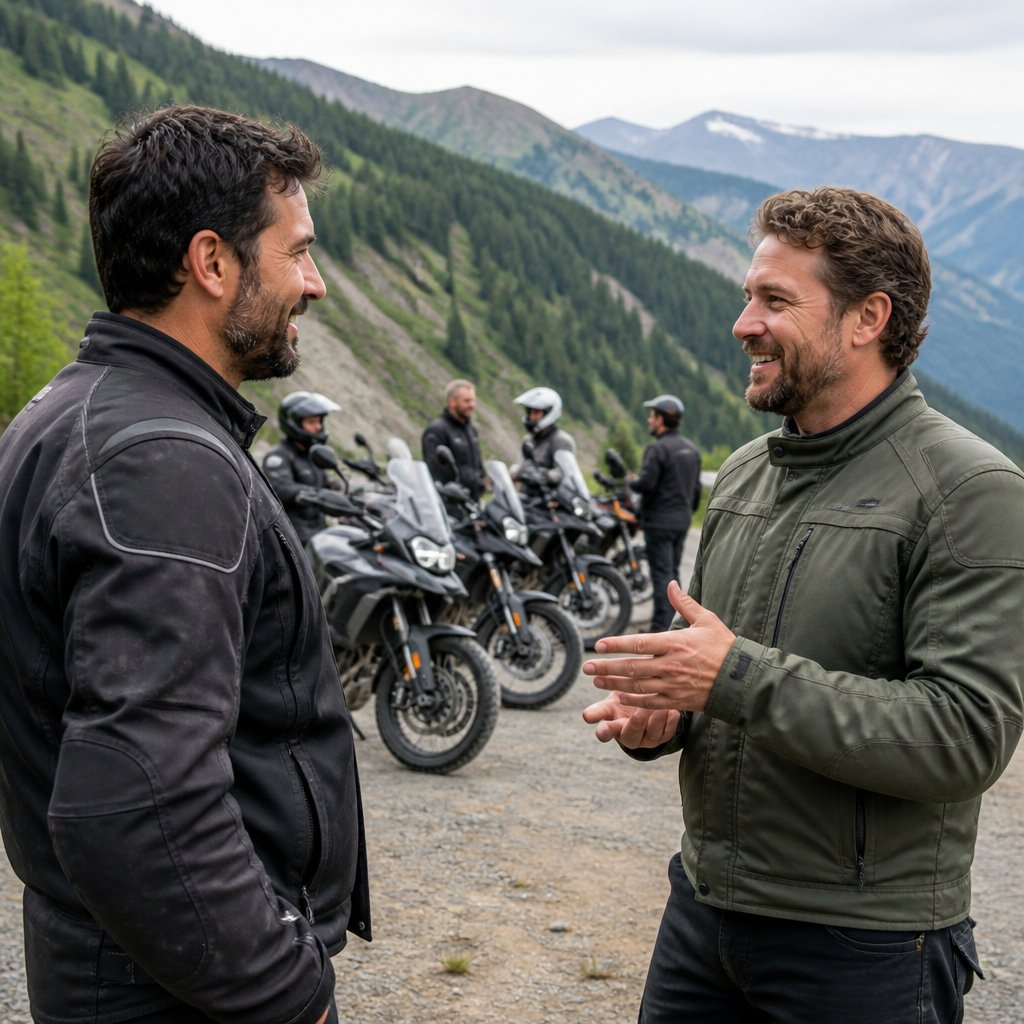
 listicle
How to Unlock the Benefits of Group Motorcycle Rides
Last Updated: November 1, 2026
Quick Summary
Group motorcycle rides deliver practical benefits: a second set of eyes on traffic, trusted hand signals, shared camaraderie, and skill development as newer riders build confidence in staggered formation. Keep groups small enough to see the ride leader and sweep rider, and set pace by the slowest rider. Solo riding offers real stress reduction and focus, so many riders do both.
- A group of four to six riders stays together easily; past eight or ten the group fragments at intersections.
- A well-run ride names a ride leader and sweep rider and holds a pre-ride briefing before anyone pulls out.
- Pace should match the slowest rider, not the fastest, to keep risk down.
- Staggered formation with growing following distance is the standard on open roads.
- Moto Recovery runs Wind Therapy group rides, with riders on their own bikes welcome.
Table of Contents
- Why Riders Choose Group Motorcycle Rides
- The Social and Mental Benefits of Riding Together
- Motorcycle Group Ride Size: Finding the Sweet Spot
- Motorcycle Group Ride Pace: Matching Speed to Skill
- Group Motorcycle Riding Safety: Formations, Signals, and Spacing
- The Benefits of Solo Motorcycle Riding
- Where Group Rides Fit: Finding Your People and Your Pace
- Frequently Asked Questions
Why Riders Choose Group Motorcycle Rides
The benefits of group motorcycle rides start with something simple: you can go farther and come home with people to call.
Here is the part most guides miss. They sell group riding as a cure for loneliness and stop there.
If you have been riding alone and wondering whether a group is worth the hassle, the honest answer is: sometimes yes, sometimes no.
The Social and Mental Benefits of Riding Together
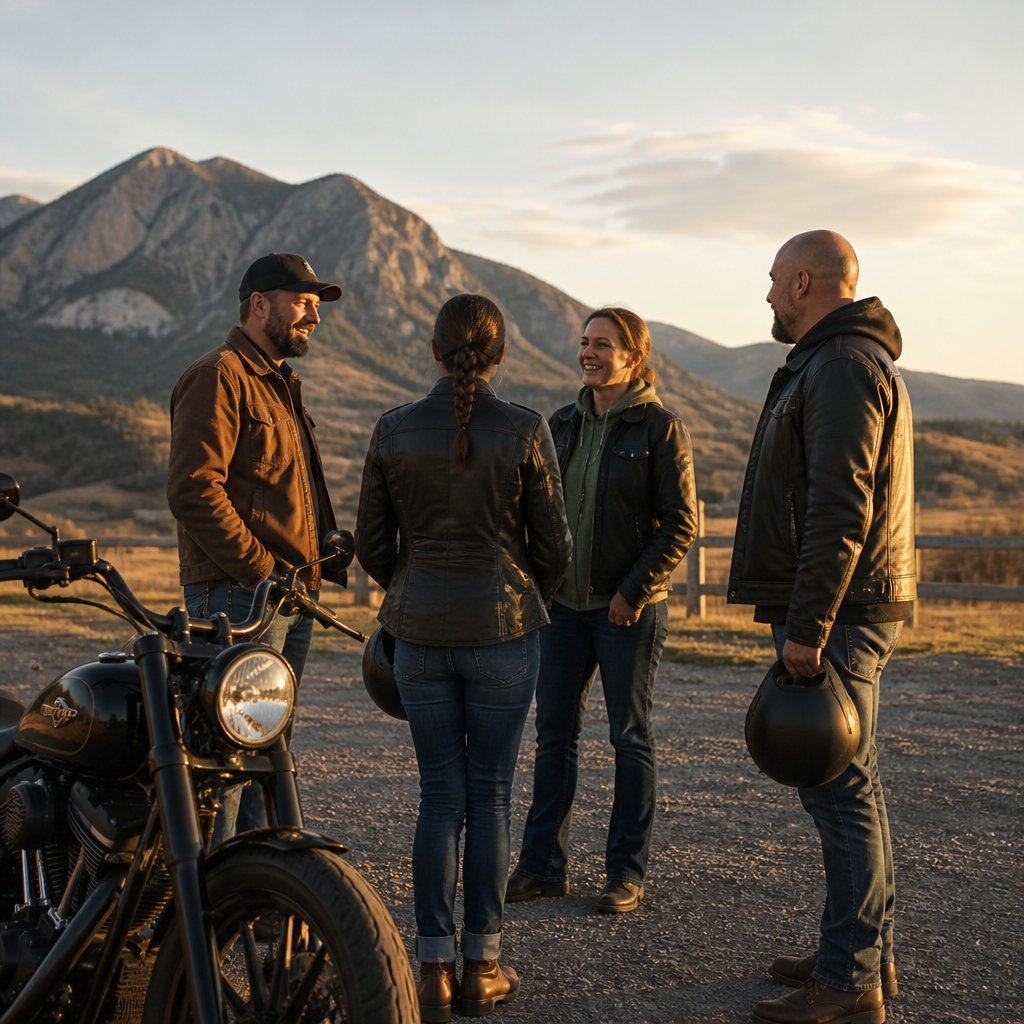
Group riding builds social connection through a shared experience that does not require small talk. You are all doing the same thing at the same time with the same risk.
There is also skill development hiding inside the fun. Watching an experienced rider handle a tight corner can teach a lot.
For a deeper look at how riding supports well-being, see this guide to motorcycle riding for mental health.
Motorcycle Group Ride Size: Finding the Sweet Spot
Motorcycle group ride size is the single biggest factor in whether a ride feels smooth or chaotic, and it is one of the two takeaways worth remembering. A group of four to six riders is easy to manage and keeps everyone together at lights. Past eight or ten, the group fragments at intersections and the sweep rider spends the day chasing stragglers.
The sweet spot for most group motorcycle rides is small enough that every rider can see the ride leader and the sweep in the mirrors. Bigger groups can work, but they need to split into smaller pods with a leader for each.
| Group Size | Best For | What to Watch |
|---|---|---|
| 2-4 riders | New riders, tight schedules | Fewer eyes on hazards |
| 5-8 riders | Most group rides | Needs a clear leader and sweep |
| 9-12 riders | Experienced groups | Splits at lights, regroup often |
| 13+ riders | Organized events only | Requires pod leaders and planning |
How to Tell If a Ride's Size Is Well Managed
Size alone does not make a ride safe or chaotic, management does. Before you commit to a ride, look for these concrete indicators that the organizer has thought about group size:
- A stated ride leader and a stated sweep rider, named before the ride starts
- A pre-ride briefing covering the route, the stops, and the regrouping points
- A plan for splitting into pods if the group grows past the organizer's comfortable number
If a ride has none of those, treat it as a red flag regardless of how many riders show up. A well-run group of twelve is safer than a disorganized group of five.
The Trade-Offs of Bigger and Smaller Groups
Smaller groups are more flexible. They improvise stops, change routes mid-ride, and keep everyone in sight. The cost is fewer eyes on hazards and less shared camaraderie.
Bigger groups offer more social connection and more hazard awareness spread across the pack, but they demand more planning: more regrouping points and more pressure on the ride leader to keep the pace consistent.
A pre-ride briefing matters more as the group grows. Confirm the route, the stops, and the regrouping points before anyone pulls out. Small groups can improvise. Large ones cannot.
Motorcycle Group Ride Pace: Matching Speed to Skill
Motorcycle group ride pace works best when it matches the slowest rider, not the fastest. That one rule can prevent much of the tension that ruins a good ride, and it is worth carrying into every group ride you join.
Skill level matching is the fix. A group of riders with similar experience rides smoother and stops less. Mixed groups can work, but the leader has to set a pace the newest rider can hold and pick scenic roads over technical trail sections.
Pace Habits Worth Building
- Ride your own ride, even in formation
- Leave space for the rider ahead to brake without warning
- Pick regrouping points so faster riders can stretch without dropping anyone
Flexibility is the other half. A good ride leader adjusts pace for road conditions, traffic, and weather. The plan is a starting point, not a contract.
How to Judge Whether a Pace Fits You Before You Join
Pace mismatches can make a first group ride go badly, and they are often avoidable. Before you commit, ask the organizer concrete questions:
- What is the planned average pace, and is it set by the slowest rider?
- Are there regrouping points, and how often?
- Will the group split if faster riders want to run ahead, or does everyone stay together?
- What happens if a rider falls behind, does the sweep rider stay with them?
If the answers are vague, assume the pace will drift toward the fastest rider. That is not a knock on the organizer; it is simply what happens without a stated plan.
Stronger With Every Mile Sticker →
The Trade-Offs of a Matched Pace
A pace set by the slowest rider is safer and more inclusive, but it is not free. Faster riders may feel held back, and the group may cover less ground.
On an experienced group with matched skill levels, a brisker pace is fine, the rule is not "always slow," it is "always matched." The mistake is mixing the two without telling anyone.
Communication keeps the pace honest. If the group is strung out, say so at the next stop. A ride leader who hears it can adjust before the day goes sideways.
Group Motorcycle Riding Safety: Formations, Signals, and Spacing
Group motorcycle riding safety comes down to three things: riding formation, hand signals, and spacing. Get those right and the group moves like one machine. Get them wrong and a simple stop turns into a pileup.
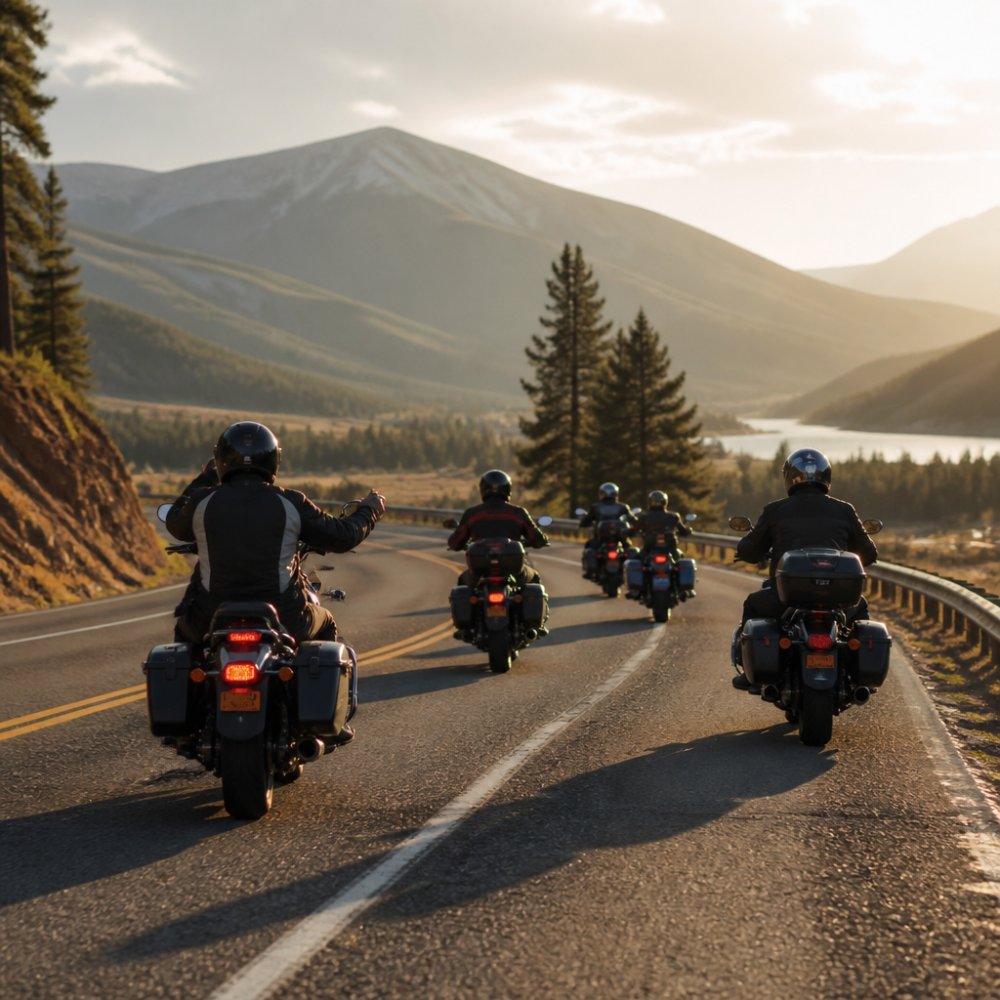
Communication keeps the group intact. Agree on hand signals before the ride: turn, slow, hazard, stop, fuel.
If you are gearing up for a first group ride, start with this beginner motorcycle gear guide so your kit is sorted before the pre-ride briefing.
Watch out: riding too close in formation can look tidy, but it removes your reaction time and can leave the rider behind you with the problem.
The Benefits of Solo Motorcycle Riding
Solo riding deserves its own case, because it is not the consolation prize. Riding alone delivers stress reduction and focus in a way groups rarely can.
Solo riding can also build self-reliance. You learn to read road conditions, plan stops, and solve problems without backup.
The trade-off is real, though. If you want a structured middle ground, Wind Therapy rides offer a way to ride with purpose while keeping the solo feel.
The honest take: many riders do both. Solo miles can sharpen you, and group miles can connect you.
Where Group Rides Fit: Finding Your People and Your Pace
Knowing the benefits is one thing. Finding a group motorcycle ride that fits is another. Start small.
A good first ride has a few markers: a pre-ride briefing, agreed hand signals, named regrouping points, and a sweep rider who stays with the back.
That is where Moto Recovery comes in.
Want to know how to find riding friends nearby? Read how do you find motorcycle riding friends for the practical steps.
Frequently Asked Questions
What are the benefits of riding a motorcycle in a group?
Group motorcycle rides build skills and confidence by letting newer riders learn from experienced ones in real time. You get shared route planning, help if something goes wrong, and the camaraderie that comes from covering miles together. Many riders also find group riding reduces stress and makes longer trips feel easier because the pace and stops are already organized. The social connection carries over after the kickstands go up, too.
What is a good group size for a motorcycle ride?
A group of five to seven riders is a common size for many rides. That size is often easier to keep together at intersections, and it still gives everyone someone to talk to at stops. Larger groups can work if you split into smaller pods with a lead and sweep for each. The key is matching group size to the road, the pace, and how many experienced riders are available to keep things organized.
Is it safer to ride a motorcycle alone or in a group?
Neither is automatically safer. Group motorcycle riding safety depends on formation, spacing, hand signals, and a clear pre-ride briefing, while solo riding removes the risk of pack confusion but leaves you without help if you have a breakdown. Many riders mix both: group rides for social trips and skill building, solo rides for focus and flexibility. Choose based on your experience, the route, and how well the group is organized.
What is a wind therapy motorcycle ride?
A wind therapy ride is a group ride focused on the mental reset that comes from time on two wheels. Moto Recovery's Wind Therapy program welcomes riders on their own bikes for group rides, with the organization covering some ride expenses. The goal is connection and stress relief, not speed. Riders of all skill levels are welcome to join.
The road is better with company, but only when the group is built right. Moto Recovery runs Wind Therapy group rides with matched pace, sensible group sizes, and a rider-first culture that welcomes newcomers and veterans alike. Riders on their own bikes are welcome, and Moto Recovery covers some ride expenses. Get started with Moto Recovery and find the group that makes every mile count.