 how-to
7 Rules for How to Ride Safely in Groups
Last Updated: November 9, 2026
Quick Summary
To ride safely in groups, pick a ride leader and sweep rider, hold a ten-minute riders' meeting, and agree on the route and stops before kickstands go up. Keep a staggered formation on open highway, drop to single file in curves, narrow lanes, rain, or wind, and pass hand signals back through the group.
- The leader sets the pace and calls the route; the sweep rides last so nobody gets left behind.
- In staggered formation the lead rider sits in the left track and the second rider in the right track.
- Go single file in curves, narrow lanes, crosswinds, wet roads, and heavy traffic or merges.
- If the group separates, the leader keeps going to the next agreed stop and the sweep stays with the last rider.
- Moto Recovery's Wind Therapy rides cap groups at six to seven riders and run at the speed limit.
Table of Contents
- Before You Ride: Planning and Pre-Ride Checks
- Motorcycle Group Riding Formation: Staggered, Single File, and Spacing
- Motorcycle Group Ride Hand Signals and Communication
- Motorcycle Group Ride Etiquette: Pace, Passing, and Predictability
- First Motorcycle Group Ride Tips: What to Expect and How to Prepare
- Join a Wind Therapy Ride With Moto Recovery
- Frequently Asked Questions
Before You Ride: Planning and Pre-Ride Checks
Learning how to ride safely in groups starts long before the kickstands go up. Group riding is its own skill, separate from solo riding, and that skill gets built at the planning stage.
A solid pre-ride routine looks like this:
- Pick a ride leader and a sweep rider. The leader sets the pace and calls the route. The sweep rides last and makes sure nobody gets left behind.
- Hold a riders' meeting. Ten minutes is plenty. Cover the route, the rest stops, fuel stops, and hand signals.
- Agree on the route and the stops. Share a map or a pin. Nobody should be guessing at a turn.
New riders in the group may still need gear guidance before they show up. This beginner motorcycle gear guide covers helmets, jackets, boots, fit checks, and layering for hot and cold weather. For a deeper look at getting the bike itself ready, Ready Bikes Ride Better walks through the pre-ride checklist in more detail.
Watch out: skipping the riders' meeting is the most common mistake. Riders who don't know the route or the signals end up tailgating the person ahead just to keep up.
Motorcycle Group Riding Formation: Staggered, Single File, and Spacing
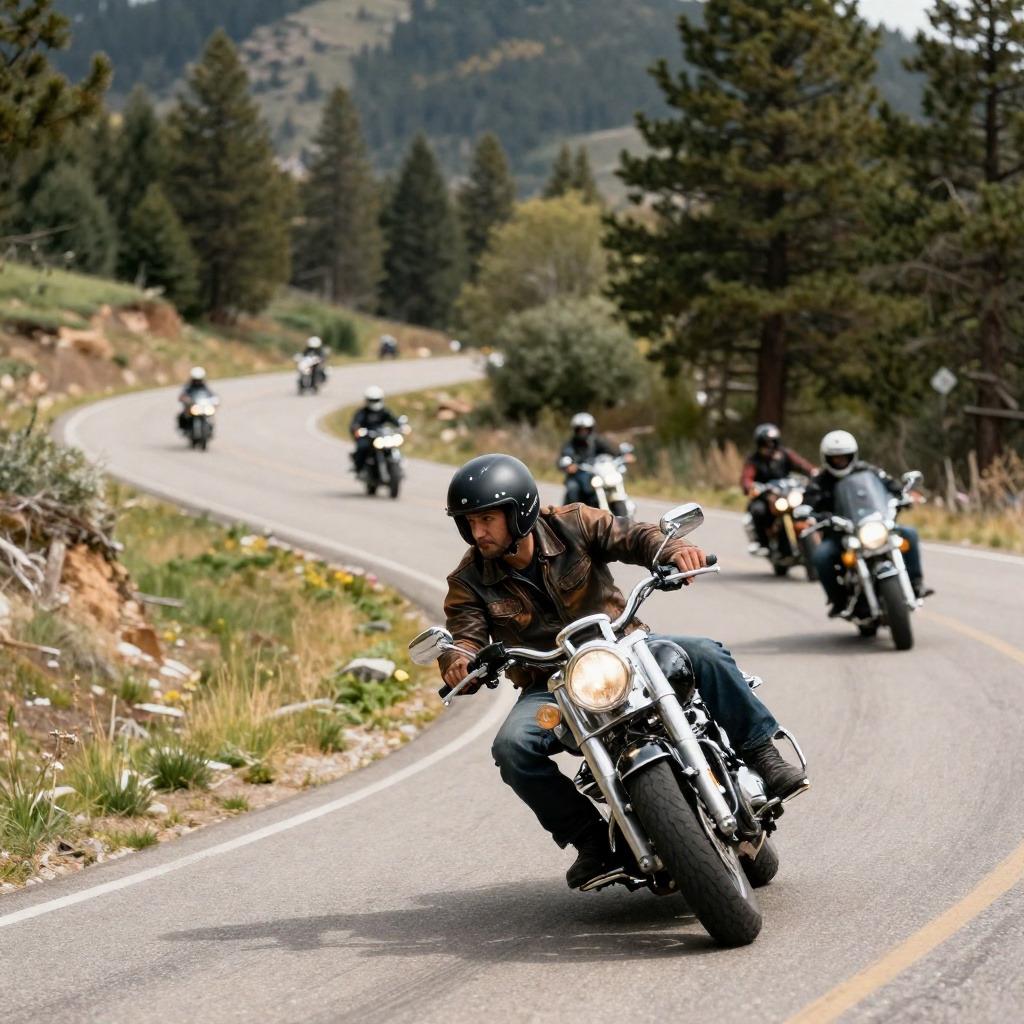
Staggered formation is a common choice for group rides.
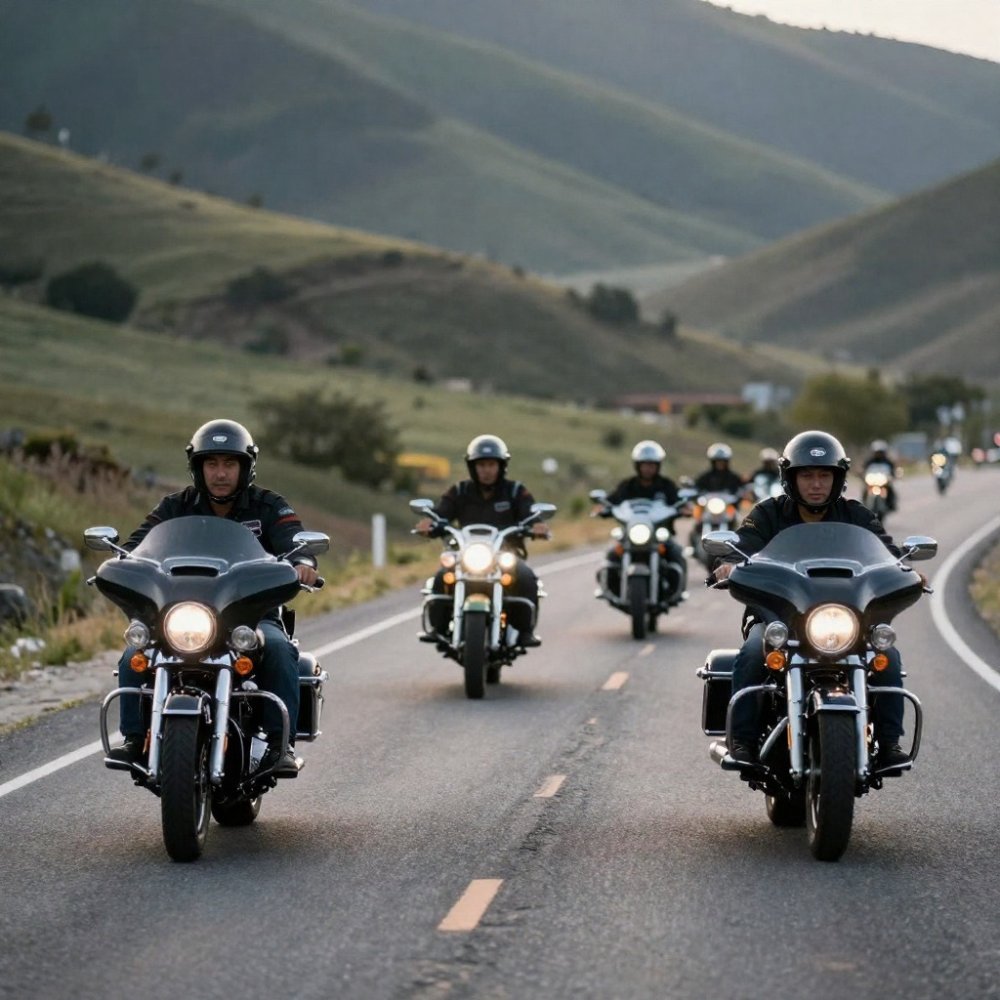
Use single file when the road narrows, when you enter a curve, or when the group passes through an intersection.
Spacing rules that keep a group predictable:
- Keep your position in the formation. Don't drift into the other track.
- Leave room to brake. If the rider ahead stops short, you need space to react.
- Never ride side by side with the bike next to you. Staggered means offset, not abreast.
Formation is a decision, not a rule. The strongest groups change shape as conditions change, and they do it early rather than mid-corner. A few practical triggers:
- Narrow or chip-sealed lanes. Go single file. Staggered leaves no room to dodge a pothole without crowding the rider beside you.
- Curves and blind corners. Single file through the turn, then re-form staggered on the straight. The rider on the outside of a staggered pair has the worst sight line into a corner.
- Crosswinds and gusty days. Single file and widen the gap. A staggered pair catches wind unevenly, and a gust can push one bike into the other's track.
Adapt the formation to conditions, not the other way around. A tight staggered pack looks sharp and rides badly.
Watch out: re-forming staggered too soon after a curve or a pass is a common cause of crowding.
Match the formation to the conditions with these practical triggers.
| Condition | Formation | Key action |
|---|---|---|
| Open highway | Staggered | Lead in left track, second in right track |
| Narrow or chip-sealed lanes | Single file | Leaves room to dodge potholes |
| Curves and blind corners | Single file | Re-form staggered on the straight |
| Crosswinds and gusty days | Single file | Widen the gap |
| Wet roads and reduced visibility | Single file | Longer following distance |
| Heavy traffic or a lane merge | Single file | Present as one vehicle to drivers |
| Gravel, debris, or known hazard | Single file | Leader calls it, sweep confirms |
Motorcycle Group Ride Hand Signals and Communication
Hand signals are the group's language, and every rider needs to know them before the ride starts.
The core signals to learn:
- Left arm out, pointing down for a hazard on the left
- Right foot out for a hazard on the right
- Left arm up, bent at the elbow for a right turn
Hazard signals matter most. Road hazards, gravel, potholes, and debris take riders down when the group doesn't call them out.
Modern groups also use helmet communicators, but don't rely on them alone. Batteries die and units drop out. Hand signals work every time.
Motorcycle Group Ride Etiquette: Pace, Passing, and Predictability
Group ride etiquette comes down to one idea: be predictable. A group ride is not a race, and the fastest rider sets nothing. The leader sets the pace, and everyone matches it.
A few etiquette rules that experienced riders follow without thinking:
- Ride the speed limit. No stunts, no showing off, no racing to the next stop.
- Hold a steady line. Sudden braking, swerving, or surging through the pack spooks everyone behind you.
- Don't pass the leader unless the group agreed on it beforehand.
The rider who weaves through the formation to show off is the one nobody wants on the next ride. Predictable riding keeps the group safe and keeps the ride fun.
First Motorcycle Group Ride Tips: What to Expect and How to Prepare
Nervous about a first group ride? That's normal, and it's a good sign. A little caution makes for a safer rider.
Start with a small group. Fewer bikes mean less pressure, shorter signals, and more room to learn the rhythm. Ride near the back at first, where you can watch the formation without leading it.
What to expect on ride day:
- The pace will feel slower than you think. That's the point.
- The group will stop more often than you would solo. Rest stops and fuel stops are built in.
- You'll be watching the rider two bikes ahead, not just the one in front.
If the Group Gets Separated
Separation happens, a red light, a slow merge, a rider who misses a turn. The fix is a plan agreed on before the kickstands go up, not a scramble at the next intersection. Most experienced groups settle on three rules:
- The leader keeps going to the next agreed stop. Slowing or stopping on the shoulder to wait creates a second hazard. The group re-forms at the stop, not on the road.
- The sweep stops with the last rider. If someone falls behind, the sweep stays with them. Nobody rides alone and nobody gets abandoned.
- The separated rider follows the route to the next stop. Don't try to catch up by speeding. Ride your own pace, follow the map or pin the leader shared, and meet the group there.
A common pattern is to pick a designated regroup point every few turns on unfamiliar roads, a gas station, a wide shoulder, a parking lot, so the group naturally collects itself instead of stringing out for miles.
If a Rider Goes Down
A crash plan is worth ten minutes of the riders' meeting. The steps are simple and everyone should know them:
- The riders behind stop safely and protect the scene. Don't add a second crash trying to help. Get off the travel lane if you can do it safely.
- The sweep or a designated rider calls 911. Give the location, the number of riders involved, and what you can see. Stay on the line.
- Don't move an injured rider unless there is immediate danger, traffic, fire, fuel. Suspected spinal injuries get worse when riders are moved.
If you're still deciding whether group riding is even for you, this piece on the benefits of group motorcycle rides explains what riders actually get out of it. Solo riders often find the social side surprising.
Watch out: the rider who tries to catch up after a separation is the one most likely to crash. Ride your own pace to the regroup point, the group will wait.
Join a Wind Therapy Ride With Moto Recovery
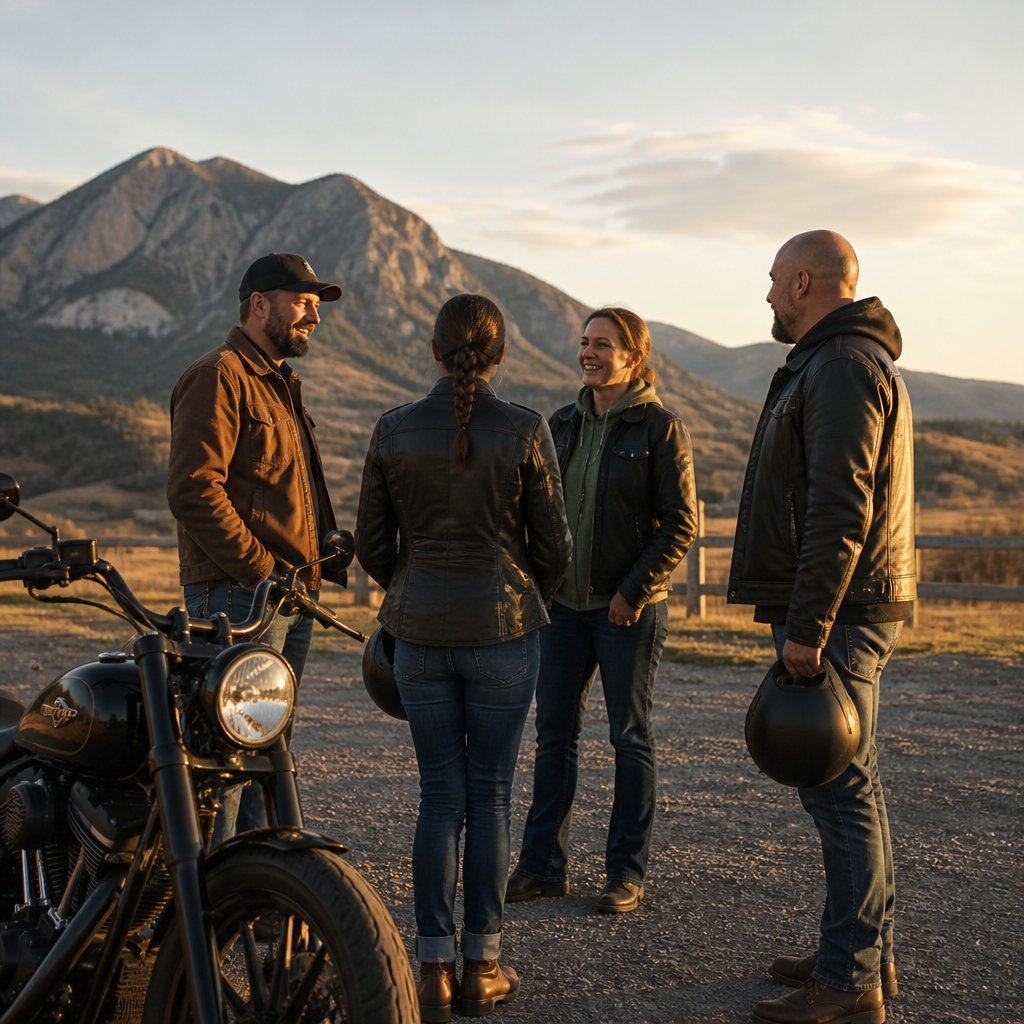
Moto Recovery built its Wind Therapy rides for exactly this moment: the rider who wants to try group riding without the pressure of a big pack.
That's the whole idea behind Stronger With Every Mile. Riders Helping Riders is how the nonprofit runs, from transport assistance to Basic Rider Course scholarships.
Wind Therapy rides are a great way to ease into group riding.
Ready to try one? Wind Therapy has the details on upcoming rides. For the mental-health and community side of these rides, the Wind Therapy guide explains how riding for mental health works through stress relief, focus, and community.
Group riding rewards the rider who prepares, communicates, and stays predictable.
Frequently Asked Questions
Where should an inexperienced rider ride in a motorcycle group?
New riders should position themselves near the back of the group, just ahead of the sweep rider. This spot lets you observe experienced riders ahead, follow their lines, and avoid pressure from faster traffic behind. The sweep rider can also keep an eye on you. If you are on your first motorcycle group ride, tell the ride leader beforehand so they can place you appropriately and brief you on the route.
What should you do if you get separated from your group?
Do not panic or speed to catch up. Stick to the agreed route and regroup at the next planned stop. If you miss a turn, pull over safely and contact the ride leader. Many groups use a buddy system or share phone numbers before the ride. The sweep rider typically stays with any rider who falls behind, so you should never be alone for long. Agree on a regrouping plan during the pre-ride meeting.
How much space should you leave between motorcycles in a group?
In a staggered formation, keep at least a two-second following distance behind the bike directly ahead in your lane position. Leave a larger gap, around four seconds, between you and the rider in the opposite stagger. In single-file formation, maintain a two-second gap. Increase spacing in rain, at night, or on unfamiliar roads. Never tailgate or ride side by side in a single lane, as this reduces your reaction time and escape routes.
What hand signals should motorcycle riders use on a group ride?
Common hand signals include pointing to hazards like potholes or debris, tapping your helmet to indicate a police presence, and extending your left arm with a bent elbow to signal a slow-down. For stops, raise your left arm with a clenched fist. For turns, use standard arm signals. Always pass signals back through the group so everyone sees them. Combine hand signals with turn indicators and brake lights for clarity.